Sunday, June 13, 2021
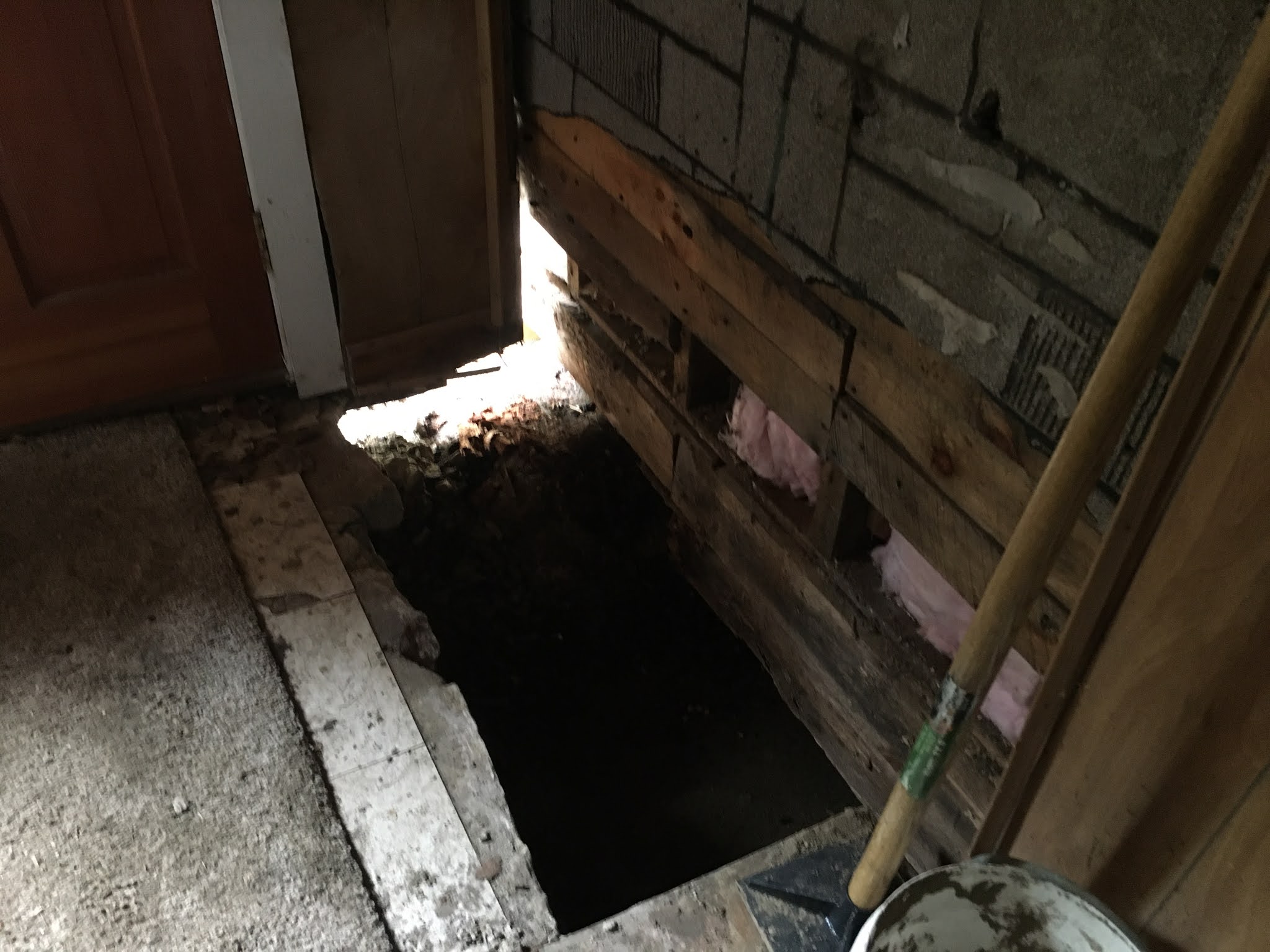
Repairs and Upgrades to the Family Lake Cottage
Friday, January 15, 2021
Vintage Cast Iron cooking along with modern Calphalon non-stuck pans for a combined meal!
My followers know that I love cooking with vintage cast-iron cookware ... some of which came from my maternal grandmother's collection, along with other pieces I have found and restored in antique shops along the way. I am also fond of modern-day Calphalon non-stick pieces ... each and every piece of cookware in our kitchen has its purpose and place!
Today, Mindy and I shopped at Winn-Dixie and picked up four pounds of 80% hamburger for $2.99 a pound. Needless to say, a good old-fashioned Salisbury Steak dinner was in order ... along with plans for Enchiladas, Chili, and who-knows-what with the remaining three pounds of hamburger over the next two weeks!
So, for tonight's supper, I started with a coarsely chopped onion sautéing in a cast iron skillet. I used my recently-acquired and restored vintage Lodge 5SK for the veg getting a very nice caramelization on the onions. I added some chopped white mushrooms, along with salt, pepper, and dried rosemary. I made two half-pound Salisbury steak patties seasoned simply with salt and pepper.
I planned on cooking the formed and seasoned ground beef in my Birmingham Stove and Range #8 cast iron skillet that I picked up a few years ago here in Florida. To complete the meal, we had some fried cabbage left over from our Wednesday night's supper. (It was great the first time ... why not again)?
And here is the finished and plated product:
Sunday, December 20, 2020
My Nana's Vintage Wagner Skillet vs A 1960s Lodge Skillet - Cast Iron Wars!
Three years ago I "rescued" an eight-inch (approximately) cast iron skillet from my grandmother Robinson's collection. It was at the family's lake cabin in Vermont, stored under the kitchen cupboards, and starting to rust, just like Nana's Cast Iron Dutch Oven. It quickly became one of my favorite pieces ... the perfect size to sauté onions, mushrooms, peppers, or any combination thereof! A single steak or burger fits perfectly in the skillet ... and it is one of my most "nonstick" pieces of cast iron cookware.
Earlier this month, I picked up a piece that I first saw at a local antique shop about a year ago and passed it up. It was dirty and sort of rusty looking, and I wasn't sure if it was worth its asking price of $12.50. Kind of "cruddy" and unloved, it spoke to me again this year when I was browsing the same shop, looking for good buys on cast iron. There it was in all its glory ... a post-1960 three-notch Lodge 5 SK skillet!
Well, a little bit of clean up work and re-seasoning left it looking so much better! It was not as hard to clean up as I thought it would be! I felt very lucky to have passed it up a year ago and it was still there for me to love this year! It was destined to be mine!
Monday, June 22, 2020
Butter, Rice, Pancakes, Syrup, and the End of Icons
Icons of my life are being "cancelled" and "removed" from my consciousness due to some perceived racial and cultural hatred. I say "perceived" because I myself don't hate anyone ... regardless of race (the people you come from) or creed (the things you believe in) or national origin (what country you come from) or political affiliation (the party you belong to.) According to some, removing these items from our collective consciousness will somehow cause us to be "woke" and will atone for all the past social injustices we are irrationally being held responsible for.
Earlier this year, I read an article that indicated that Land O' Lakes (the butter company) was removing the female Native American image (I can't say "picture of Indian maiden", can I?) from my familiar package of butter ...
If you look back at earlier packaging for these products, or at their early advertising images, the characterizations and presentations of these icons was undeniably racist. While unacceptable today, it was de rigueur in those times. We have no right (or reason) to judge past people long since dead by modern-day standards!
Very few Americans alive today ever bought Aunt Jemima pancake mix with Aunt Jemima depicted as a "mammy" stereotype, or Cream of Wheat with Rastus as an illiterate "step-and-fetch-it" stereotype.
As our American culture changed, these marketing icons kept pace with changing social sensibilities. Uncle Ben's image evolved over the years into that of a well-to-do older black man. Aunt Jemima is an attractive woman and no longer a plump, gap-toothed smiling "mammy". Rastus for years has been depicted as a chef and not a laborer.
So what gives with Mrs. Buttersworth? Are British-American citizens protesting over her image as a plump white grandmother? (The bottle is brown to keep light out ... Mrs. Buttersworth is undeniably white!)
As innocent images of our youth fall under the wrecking ball of political correctness and becoming woke ... let's close our eyes and remember the song from the syrup advertisements of a bygone era ...
... Aunt Jemima waffles ... without her syrup
... Is like the spring ... without the fall
Rest in peace, icons. Rest in peace!
Friday, May 15, 2020
Another Use For Leftover Chicken!
I also like the challenge of turning leftover items into something that looks and tastes like it was never a leftover.
While I was in the middle of cooking, Mindy came into the kitchen with her phone to her ear, in deep conversation with my mother-in-law. "Mom," she said, "I wish you could smell this through the phone! This is going to be deeeeeelicious!" It was.
This is so different I don't think you will find a recipe anywhere but here. Introducing Pollo Latino de Brad (Brad's Latin-style Chicken.)
Ingredients:
- 3 Pre-cooked boneless chicken breasts
- Light Olive Oil or other mild vegetable oil. (Don't use EVOO!)
- 1 medium yellow onion, slivered
- diced sweet peppers (I prepare a mixture of green, yellow, and red peppers)
- 1 pkg Vigo Yellow Rice (Arroz Amarillo)
- Badia Sazon Completa
- Goya (or Badia) Adobo seasoning
- 1 can Goya Gandules Verdes (Pigeon Peas)
- Lime juice
- Kosher Salt and Ground Black Pepper
Saute over medium heat until vegetables start to carmelize.
Keep the veg moving around in the skillet. We want flavor and color to develop, without burning! Add a little more oil if needed.
For the chicken, I used three leftover lemon pepper breasts that I cooked on the grill for Mindy's Mother's Day dinner. Any cooked, skinned, and deboned chicken meat can be used, however.
I sliced the chicken into medallions. If using leg or thigh meat, simply cut into bite-sized pieces.
Add chicken to skillet mixture. Reduce heat to medium and arrange chicken so the medallions are touching the surface of the skillet. Allow them to gently brown, turning as needed.
Season to taste with Sazon, Adobo, and pepper. I used about 2 Tbsp Sazon, 1 Tbsp Adobo, 1 tsp pepper.
Sazon has become one of my go-to seasonings over the years. It is a blend of salt, cumin, and other seasonings that define the flavor of Puerto Rican, Dominican, and Cuban cuisine. Adobo is another latino seasoning, consisting of salt, garlic, pepper, and ground oregano. Be careful of the salt content and season lightly at first. You can always add more later!
Now that your kitchen is filled with the aroma of Latino soul food ... the rice is about ready and the gandules are warmed thoroughly ... add the ingredient that makes the flavor explode:
Lime Juice! (About 1/8 cup) Deglaze the pan and loosen all the sticky bits of flavor from the bottom! Turn the heat down a little, and allow the sauce to reduce. Taste! If the lime flavor is a bit too strong for your taste, add a couple tablespoons of water. Or, if you prefer, a little more lime juice!
Add additional seasoning to taste. If the sazon is strong enough but the dish needs salt, simply add a little kosher salt.
Serve over rice with a side of gandules. ¡Provecho! (Bon Appetit!)
Monday, May 4, 2020
Rabbit Hash ... my love of soup ... and a small town in Kentucky!
As a classic "Boomer", I grew up with the knowledge of how hard my parents had it when they grew up during the Great Depression. I understood that everything was scarce when they were young ... that my generation had it much better ... and it seemed like I was reminded of that fact nearly every day! Just when things were getting better for them, along came World War II and everything was scarce again!
In our modern time (2020) and experiencing the COVID-19 pandemic first-hand, I feel fortunate that I can relate to the stories I heard from my youth of how they grew up and withstood the impact of those two major life-altering events. If they could endure, so can I!
While growing up, we would often eat a simple soup made with whatever leftover meat we had on hand and a few fresh vegetables (usually onion, celery, potato, and carrots) mixed with whatever else was available (leftover gravy) to fortify and flavor the mixture. Pappy always called it "Rabbit Hash" and I came to realize that this was one of the meals (along with soup-beans and cornbread) that helped sustain my ancestors during those difficult times. I grew to appreciate not only the flavors but the God-given sustenance that those meals provided!
Rabbit Hash is also the name of a small town in Boone County, Kentucky, just a few miles south of the county seat, Burlington. Rabbit Hash sits right along side the Ohio River, directly across from the town of Rising Sun, Indiana. For many years, a ferry connected the two towns to the point where they became as one community. In fact, in the mid 1800s, Rising Sun had a post office that served that region of Boone County. Rising Sun was closer to the railroad, and they sent the mail by ferry to Rabbit Hash.
Now, how does a town come to be named "Rabbit Hash" anyway? It seems that around the spring of 1847, when the Ohio River was running over its banks, a flood caused a quantity of small game (including rabbits) to run toward higher ground. Local residents, hanging out at the store, began to worry about what they might be able to cook for dinner if the waters raised much higher. One local fellow, observing the rabbits running uphill, said "we can always have rabbit hash!"
The Rabbit Hash General Store, right in the middle of the village of Rabbit Hash, was the center of that small community.
My Great-Great-Great Grandfather, Ambrose Bradford, lived in the Carleton District of Boone County back in those days. The Carleton magisterial district of Boone County extended from the river all the way up toward Burlington. Ambrose lived at the end of Locust Grove Road (off of East Bend Road) and his property extended down over the hill to the east to Gunpowder Creek. He and his family were living about halfway between Burlington and Rabbit Hash, and according to Census records, were receiving their mail from Rising Sun.
Fast-forward to 2020. This evening, I turned to my ancestral roots and once again produced a rabbit hash. My lovely bride, Mindy, is not a big fan of soups in general, although she does admit that when I make my "stuff" it is somewhat edible! When she got called in to work unexpectedly this evening, I took the opportunity to make one of my life-long favorites ... and it was good!
A couple of nights ago we cooked some pork loin rib-eye steaks, and had some of the pork leftover. We also had some leftover kale, along with some rice from that dinner. I chopped a little onion and celery ... sauteed that with some vegetable oil, and added some diced pork. I seasoned it with a little kosher salt, pepper, and thyme. I added a cup and a half of water, along with a cup and a half of Clamato juice. I chopped up the kale and added it to the mixture along with some halved grape tomatoes. I let it simmer for 45 minutes, then added the cooked rice. Another 15 minutes or so, and it was ready to serve with some shredded parmesan cheese and a little parsley.
Yep ... pretty darned good if I say so myself! I'm sure my Pappy would like it ... and I wouldn't be ashamed to serve it to Grandpa Ambrose either! Try it sometime ... you may come to love Rabbit Hash ... either the leftovers or the village!
I'll never run out of toilet paper ... EVER!
"Oh my God ... a winter storm is coming ... go to the grocery store and buy every gallon of bottled water and every loaf of bread ... we can't possibly use it all ... but if we don't empty the shelves, we're all gonna die!!!"
In northern New England, we always have storms in the winter. Usually one right after the other. Snow falls, we shovel it, and it falls again. After a lifetime of that, we made the decision to start wintering in Florida where it doesn't snow! My bones don't ache, the sun shines daily, and life is quite nice!
I generally ignore the "Chicken Little the sky is falling" stuff, so imagine my dismay when I discovered we actually couldn't buy any toilet paper once the "news" announced that we were all going to be locked down due to the novel coronavirus pandemic.
Sure as "shit" ... we went to our favorite Winn-Dixie store on Seminole Boulevard ... and there was none to be found! We went to Publix ... Walmart ... Neighborhood Market ... Dollar General ... Family Dollar ... not a single roll ... anywhere! We started going at odd times, and finally found some early one morning at good-old Winn-Dixie!
The media had induced a panic-buying situation that completely decimated the supply chain ... and made it impossible for anyone who had not preemptively purchased a year's supply of bathroom tissue to find a single roll. What if we could never buy TP again?
But then ... I remembered!
My maternal grandfather ... Clarence A. Robinson ... worked in a paper mill in Gorham, NH. Many years ago, just prior to his retirement in the early 1960's he was involved in the installation of a new tissue machine at the Brown Company Cascade Mill.
At our family lake cottage, in Maidstone, Vermont, there is a roll of toilet paper in a plain paper wrapper. Written on the wrapper in pencil is my grandfather's handwriting ... "from first good reel of paper made on new Tissue Machine Cascade Mill May 7, 1962."
This roll of TP has been safely tucked away since 1962 ... maybe Gramps knew something we didn't about the Great Shortage of 2020 that would come to pass 58 years in the future!
Paper mills used to be scattered throughout northern New England, located alongside powerful rivers that provided not only a source of power, but a means of getting the raw material (trees) to the pulp mills. For the most part they are now gone ... a victim of a changing paper demand and higher transportation costs that makes it much less costly to manufacture low-quality softwood paper (like tissue) in other parts of the country. One mill in New Hampshire is still producing tissue ... the former Brown Company mill at Cascade ... on the same machine that produced our heirloom roll.
Paper machines operate on a 24 hour schedule, shutting down only for repairs or scheduled maintenance. They can only produce so much paper each day. There is very little excess capacity within that industry. Once the supply chain has been wiped out by panic and hoarding it will take some time for it to recover. Good luck to us all!
We used to have a supply of low quality paper delivered to our homes several times a year in the form of the "Sears, Roebuck & Company" catalogs. It made for a good emergency supply ... like if we ever got snowed in for a week and couldn't make it to the store!
Of course, the Sears catalog has gone the way of the buggy whip ... obsolete and no longer manufactured. Replacing it, of course is Amazon and Internet shopping ... and no matter how hard you try or how desperate you become, you can't wipe your butt with a web page!